
Author: Noah Rothbaum
Over the last 30 years, Alex Coronado has worked just about every possible job making tequila—from distilling to blending to bottling. He’s now José Cuervo’s Maestro Tequilero. It’s a fancy way of saying that Alex is in charge of every aspect of producing all of Cuervo’s six tequila brands at the company’s four distilleries that are organized under two NOMs. He makes everything from its number-one selling tequila in the world, Cuervo Especial, to its sought-after, Reserva de la Familia by Jose Cuervo Extra Añejo and the first ever cristalino tequila, Maestro Dobel Diamante.
It’s a lot of responsibility to produce that many different types and styles of tequila and that’s not to mention carrying on the legacy of the company, whose roots stretch back to 1758. While Cuervo is a household name and practically created the tequila category, it’s still a family run business and has been for 250 years. Alex works closely with the 11th generation of the Cuervo family, Juan Domingo Beckmann, who is the company’s Chairman and is deeply involved in creating every new product that the brand launches.
Alex has always impressed me with his deep experience and his fascinating tequila insights as well as how excited he is to share the information with others. It’s really rare to find an expert that is so generous with their knowledge and willing to patiently answer questions.
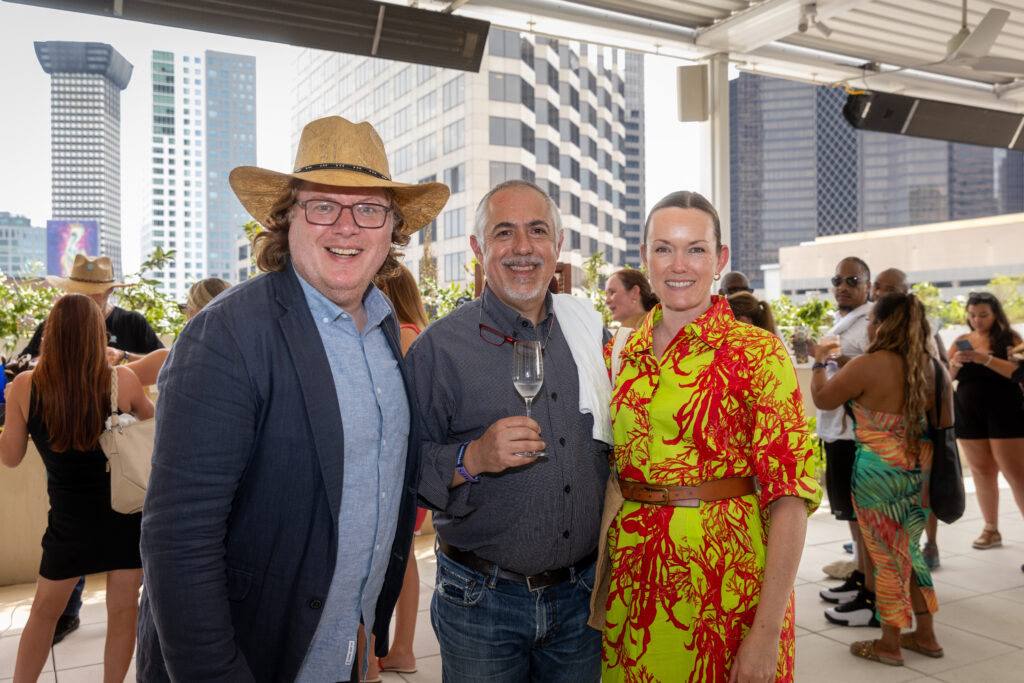
During Tales of the Cocktail this past summer, I hosted a conversation with Alex called Cuervo: Crafted by Tradition, Legacy in Every Pour.
Read on for my interview with Alex about the state of tequila and what it is like to be the master distiller of the most famous tequila company in the world.
“If you think of Mexico, you think of tequila. And if you think of tequila, you think of Mexico. To be Mexican and to be living in Guadalajara it feels great to work at a tequila company and especially at Cuervo, the oldest tequila company. It’s a great blessing. The company has been family owned since it was founded. Right now our Chairman is Juan Domingo Beckmann. He’s the 11th generation of the family. He is really involved. I also had the pleasure when I started back in 1993 to work with his father, Juan Francisco Beckmann Vidal, who helped to establish the tequila category’s Denomination of Origin and the Norma. He had a vision to bring tourism and wealth to the town of Tequila and provide long term financial stability and education to the region. Thanks to him they built the highway, the train, schools, hotels and an arts center.”
“I represent a very talented team. It’s not just Alex. My team is about 700 people, between the four distilleries and the bottling facility and the quality team and the innovation team. So that’s why I say it’s not me, it’s a lot of people back there working on our six tequila brands.”
“As a distiller I have many points in the production process to make choices that change outcomes – from cooking to crushing to fermentation to distillation to aging. Cuervo produces a variety of tequilas that range across different price points to satisfy different palates. We still follow traditional methods of production in masonry ovens (not oven pits, which were the first method), but we balance tradition with innovation in production methods.”
“Cuervo Especial is the world’s best-selling tequila brand, and is the brand that has been able to introduce tequila to the world. To produce a consistent liquid year over year in an incredibly difficult thing to do, but it is what consumers expect. One way we do this is the use of a diffuser, which is part of a cooking method that seems to receive a lot of scrutiny here in the U.S. It is a piece of equipment that, without it, decades ago we would not have been able to scale up tequila production at a price that consumers could afford both inside and out of Mexico. The diffuser is essentially a pressure washer that is an efficient production method designed to help lower energy consumption and increase sugar content yield from every agave plant. Diffusers reduce water usage by more than 50% vs. The traditional oven, uses 46% less energy and 20% less agave. In times of agave shortages, this was critical. But this type of production isn’t just about scale, we can create a much lighter tasting tequila with a very unique sensory profile: less sweet notes and more herbal and floral notes as well as less methanol and congeners. This has been critical for our cost management and expansion outside of Mexico to meet consumer demand. We use a diffuser for Especial and our Ready To Serve tequilas – we use a traditional masonry oven for everything else.”
“As a spirit that many more people are discovering, people are curious to learn more about how it’s made and its ingredients. We see this trend across food, it hasn’t quite hit spirits just yet. Tequila is the first! Although wine sulfites are an additive many consumers are aware of. On the most part, additives are used in spirits production to create consistency of flavor and color.
One myth to clear up though – all silver/blanco tequilas by law must be made without any additives. If it is a flavored blanco tequila, that has to be disclosed on the label. But everything else, will not use additives.”
In tequila, the challenge for us as producers is that the governing body for tequila has no scalable or regulated test in place that provides proof and clarity to the consumer about whether a tequila has the approved and regulated additives, or whether there are naturally occurring compounds, like glucose, glycerol and fructose coming from the barrel, or the alcohol that was aged in the barrel before tequila, like bourbon. These things would surely be considered additives to the consumer, but perhaps not to us producers.
“We have our own machines at our bottling facility to test for additives because cross-contamination from shared storage tanks and bottling lines is a real issue for a company of our size and for other contract distillers who make varied products. We recently saw stevia show up in a bottle of Reserva de la Familia, which was cross-contaminated from another product bottled in the same facility (likely a Ready To Serve cocktail). Third-party organizations that are offering brands additive-free labeling do not have the large-scale infrastructure, testing and technical capabilities to confirm additive-free requirements for each batch of tequila made to assure the consumer. A one-time test of one bottle at a time isn’t enough. Right now, we’ll continue to follow the strict regulations, which vary by country. For example, in Germany, we are required to disclose the use of spirit caramel color for Cuervo Especial Gold, as indicated on the bottle.”
“It’s the difference between being a tequila producer and being a tequila speculator. And not a lot of people consider the complexities and responsibilities you have if you are a family-owned producer for 11 generations. The vast majority of tequila companies, of all sizes, do not plant a single agave plant, nor do they care for the land and people that produce its tequila. Many entrepreneurial brands are taking shortcuts in tequila production, seeking a quick-turn investment and export business destroying the Mexican communities that are the core of tequila-making. Brands that do not invest in agave farming or tequila making are creating volatility in the local economy and putting farmers at a significant disadvantage. We plan long-term with our owned estates, partners and farmers, setting fair prices to avoid volatility in the market and not abusing agave farmers.
Environmental damage is also a significant issue in Mexico. Tequila production utilizes a significant amount of water and there needs to be stricter regulations to increase sustainability and minimize waste as the industry expands. The industry currently lacks sustainable action through stillage treatment plants, resulting in water shortages and significant water waste, as well as pollution being released back into the land. All Cuervo distilleries have stillage treatment plants, which each cost more than $100 million. Small producers or contract distilleries do not have this capability or commitment to sustainable operations. Remember that one liter of tequila at 55% ABV creates between 10 and 15 liters of stillage. Our company spends more than $600,000 per year treating that stillage.”
“We are reusing, recycling, and repurposing 100 % of the plant bagasse for composting. Some of it is used for our own fields. We also give some of it to companies to sell for compost. In addition, we are experimenting in creating bio plastics with our agave bagasse, including using it to make drinking straws, cups and stirrers.”
This article was published in partnership with Proximo Spirits.